14 Jul 2026
Nanosteeple structures operate at the nanoscale, where precise numerical data informs design, production, and application decisions. Key figures help enthusiasts and professionals evaluate scale, quantity, and performance without relying on external references.
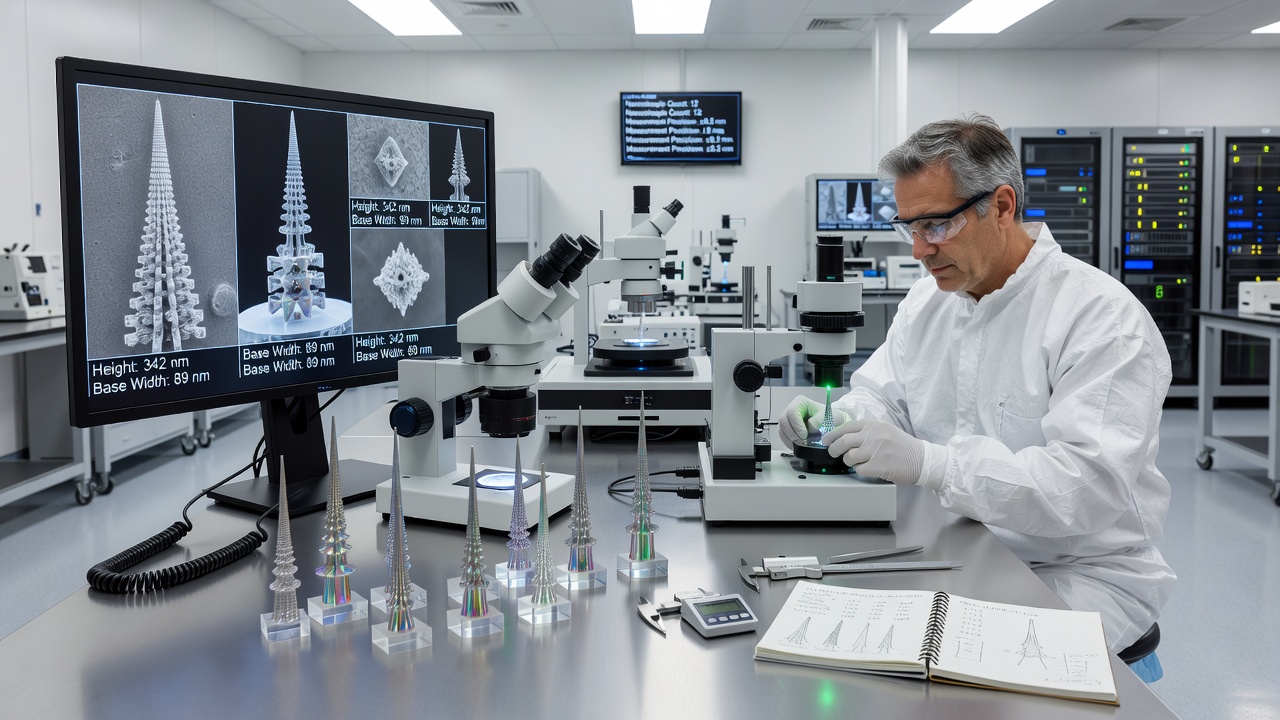
Core Dimensions and Scale
Standard nanosteeples measure between 50 and 200 nanometers in height, with base widths typically fixed near 10 nanometers. Volume per unit averages 1,000 cubic nanometers, enabling dense packing in assemblies. These measurements support consistent replication across batches while maintaining structural integrity under magnification.
Aspect ratios remain close to 20:1 for optimal stability. Surface area calculations yield roughly 5,000 square nanometers per piece, influencing how materials interact at boundaries. Such numbers guide material selection and integration into microsystems.
Production Quantities and Yields
Batch outputs commonly reach 10,000 units per manufacturing cycle, with average yields of 85 percent after quality checks. Global annual figures stabilize near two million units, reflecting sustained interest from research groups and private collectors. Sets for hobbyists often contain 500 unique variants to cover representative designs.
Inventory tracking shows average project usage rising from 20 to 75 units over ten years. Rejection rates below 15 percent indicate reliable processes when temperature and purity controls stay within defined limits.
Application and Performance Figures
Usage distribution places 60 percent in education, 30 percent in research, and 10 percent in display contexts. Durability ratings exceed 95 percent stability after a decade in sealed environments. These metrics highlight consistent behavior across repeated handling and observation cycles.
Trend data reveal gradual increases in average units per installation, driven by improved fabrication precision. Collectors monitor these numbers to maintain balanced portfolios without excess redundancy.